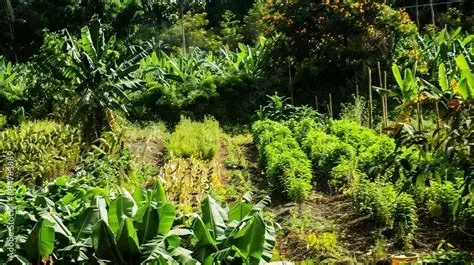
Sustainable agroforestry practices combine trees with crops, livestock, or other agricultural activities to create productive and resilient farming systems. Rather than treating trees and farmland as separate resources, agroforestry brings them together in ways that can benefit both the environment and the farmer. With thoughtful planning, farmers can use trees for shade, fruit, timber, wind protection, soil improvement, and additional income while continuing to produce food.
What Is Agroforestry?
Agroforestry involves deliberately integrating trees or shrubs into agricultural landscapes. Farmers can arrange these plants in different ways depending on their land, climate, crops, and goals.
For example, a farmer might plant fruit trees among crops, establish trees along field boundaries, or create areas where livestock graze beneath suitable trees. Each arrangement provides different benefits.
Common agroforestry systems include:
-
Alley cropping between rows of trees
-
Silvopasture combining trees and livestock
-
Windbreaks around fields
-
Trees planted along waterways
-
Fruit trees integrated with crops
-
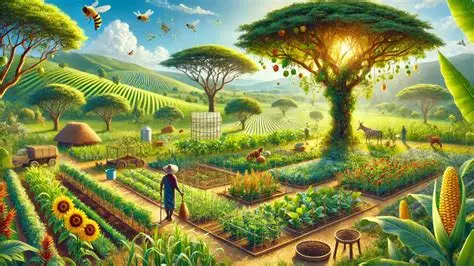
Home gardens containing multiple plant layers
The right system depends on local conditions and the farmer’s available resources.
Choose Suitable Trees
Tree selection is one of the most important parts of sustainable agroforestry practices. A tree that performs well in one environment may struggle in another.
Before planting, consider rainfall, soil type, temperature, available space, mature tree size, and intended purpose. Farmers should also consider whether tree roots or shade could compete with nearby crops.
Choose species that suit local conditions and avoid introducing invasive plants. Native or well-adapted species may provide valuable ecological benefits while requiring less intensive management.
Consider Multiple Benefits
A productive agroforestry system can provide several benefits from the same piece of land. For example, fruit trees can provide food and income, while their foliage may contribute organic material to the soil.
Other trees can provide poles, timber, fodder, fuelwood, or shade. However, farmers should balance these benefits against competition for water, nutrients, and sunlight.
Improve Soil Protection
Trees can help protect soil from wind and water erosion. Their roots hold soil in place, while leaves and plant residues can reduce the impact of rainfall on exposed ground.
Tree-based systems can also contribute organic material as leaves and branches fall and decompose. Over time, this material can contribute to soil structure and nutrient cycling.
However, trees alone cannot solve every soil problem. Farmers should combine tree planting with appropriate soil-management practices such as mulching, cover crops, crop rotation, and responsible nutrient management.
Manage Water Carefully
Water availability should influence every agroforestry decision. Trees require water to establish and grow, and their roots may compete with crops when resources are limited.
Therefore, avoid planting trees too densely in areas where water is scarce. Establish young trees carefully and monitor soil moisture during dry periods.
Trees can also influence water movement through the landscape. Vegetation along waterways may help stabilize banks and reduce erosion, while strategically placed trees can provide shelter and improve the farm’s overall microclimate.
Good sustainable agroforestry practices require farmers to understand these interactions rather than assuming that adding more trees will always produce better results.
Create Useful Windbreaks
Strong winds can damage crops, increase evaporation, and contribute to soil erosion. Strategically planted trees and shrubs can reduce wind speed and provide protection for vulnerable fields.
When designing a windbreak, consider prevailing wind direction, tree height, spacing, and the amount of protection required. A poorly designed windbreak may create unwanted competition or gaps that reduce its effectiveness.
Choose species that tolerate local conditions and maintain them through appropriate pruning and replacement.
Integrate Livestock Carefully
Silvopasture combines trees with pasture and livestock. This approach can provide animals with shade and, depending on the tree species, additional sources of suitable fodder.
However, young trees can suffer damage from grazing animals. Farmers may therefore need temporary protection while trees become established.
Livestock management also matters. Overgrazing can expose soil and damage vegetation, undermining the environmental benefits of the system. Rotational grazing and appropriate stocking levels can help maintain ground cover.
Plan for Long-Term Returns
Trees generally take longer to produce returns than annual crops. Consequently, farmers should establish realistic expectations before investing in agroforestry.
Create a long-term plan that identifies what each tree is expected to provide and when those benefits may become available. Some species may produce fruit within several years, while timber trees can require much longer periods before harvest.
Diversifying tree products can spread financial risk. A farm might combine fruit, fodder, timber, poles, or other suitable products rather than depending on one source of income.
Protect Biodiversity
Agroforestry can create habitats for birds, insects, and other organisms. Trees provide shelter, food, nesting areas, and additional vegetation layers that may not exist in a conventional monoculture.
Greater plant diversity can also make agricultural landscapes more varied and resilient. Nevertheless, farmers should monitor pests and diseases because increased vegetation can sometimes create additional management challenges.
Planting diverse, suitable species can help create a balanced system while supporting productive agriculture.
Start Small and Monitor Results
Farmers do not need to convert an entire property to agroforestry immediately. Starting with a small area allows them to observe how trees interact with existing crops, soil, water, and livestock.
Record planting dates, tree survival, growth rates, crop yields, pest problems, and maintenance requirements. These records can guide future expansion.
As the system develops, farmers can adjust spacing, pruning, crop choices, and tree species based on actual results rather than assumptions.
Build a Resilient Farming System
Sustainable agroforestry practices work best when farmers consider the entire farm rather than focusing on trees alone. The goal is to create useful relationships between trees, crops, livestock, soil, water, and people.
Before planting, develop a clear plan and consider how the trees will behave as they mature. Give young plants adequate care, protect them from damage, and monitor competition with nearby crops.
Agroforestry requires patience, but its long-term potential makes it valuable for many farming systems. By combining appropriate trees with agricultural production, farmers can diversify their outputs, protect natural resources, improve habitat, and create additional opportunities for future income.
Ultimately, sustainable agroforestry practices are about working with natural processes while maintaining productive farmland. With careful species selection, thoughtful design, regular management, and long-term planning, farmers can develop landscapes that support both agricultural production and environmental health.