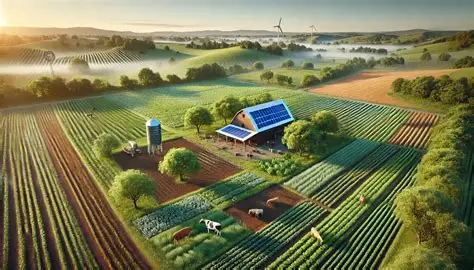
Resilient farming practices help agricultural operations cope with drought, heavy rainfall, pests, market changes, rising costs, and other unexpected challenges. Farming always involves uncertainty, but careful planning can reduce the impact of difficult conditions. By protecting natural resources, diversifying production, maintaining reliable infrastructure, and managing finances carefully, farmers can create operations that recover faster and remain productive over time.
Understand Your Farm’s Risks
Building resilience starts with identifying the challenges most likely to affect the farm. These risks differ according to location, climate, farm size, crops, livestock, and access to markets.
Consider potential threats such as:
-
Drought and water shortages
-
Flooding and soil erosion
-
Crop pests and diseases
-
Livestock health problems
-
Equipment breakdowns
-
Rising input costs
-
Unpredictable market prices
-
Labor shortages
-
Extreme temperatures
Once farmers understand their main risks, they can prioritize practical solutions instead of spending resources on problems that are unlikely to affect them.
Protect Soil Health
Healthy soil forms the foundation of a resilient farm. Soil with good structure can support root development, absorb rainfall, and retain moisture more effectively.
Farmers can improve soil health by adding suitable organic matter, rotating crops, reducing unnecessary tillage, preventing erosion, and keeping the soil covered where appropriate.
Reduce Erosion
Heavy rainfall and strong winds can remove valuable topsoil. Farmers can reduce erosion through cover crops, mulching, contour farming, grass strips, terraces, and other suitable conservation practices.
Keeping productive soil in place protects both current and future harvests. It also reduces the need to replace lost nutrients.
Improve Water Security
Water shortages can quickly threaten agricultural production. Farmers should therefore develop strategies that make better use of available water.
Efficient irrigation, rainwater harvesting, water storage, mulching, and soil-moisture monitoring can help farms manage limited supplies. Fixing leaks and maintaining irrigation equipment can also prevent unnecessary losses.
Farmers should consider their water needs before expanding production. Adding crops or livestock without a reliable water supply can increase vulnerability during dry periods.
Diversify Crops and Enterprises
Depending on a single crop can expose a farm to significant financial and environmental risks. If weather, pests, disease, or market prices affect that crop, the entire operation may suffer.
Crop diversification spreads risk. Farmers can grow several crops with different planting and harvesting periods or combine crop production with livestock, poultry, fruit trees, or other suitable enterprises.
However, diversification should remain manageable. Adding too many activities can increase labor requirements and make the farm harder to organize.
Maintain Healthy Livestock Systems
Livestock can contribute to farm resilience by providing multiple products and income opportunities. However, animals also require consistent feed, water, shelter, and health management.
Farmers should maintain secure housing and fencing, monitor animals regularly, and develop plans for periods when pasture or feed supplies become limited.
Producing or storing appropriate feed before difficult seasons can reduce pressure when grazing conditions deteriorate.
Maintain Farm Equipment
Equipment failures can become particularly costly during planting and harvesting windows. Preventive maintenance can reduce the likelihood of unexpected breakdowns.
Inspect machinery regularly and follow manufacturer recommendations for servicing. Check tires, belts, filters, fluids, electrical components, and other important parts.
Keep essential tools and basic replacement parts available when practical. A simple maintenance schedule can prevent minor problems from becoming major interruptions.
Strengthen Financial Resilience
Good production does not always guarantee financial stability. Prices, input costs, and unexpected expenses can change rapidly.
Farmers should maintain accurate records of income and expenses. Calculate production costs for major enterprises and identify which activities generate the strongest returns.
Where possible, maintain an emergency reserve for urgent repairs, livestock needs, or production disruptions. Avoid taking on unnecessary debt simply to expand quickly.
Explore Multiple Markets
Selling through several channels can reduce dependence on a single buyer. Depending on the farm, options may include local markets, wholesalers, restaurants, retailers, farm shops, or direct sales.
Building relationships with multiple buyers can provide greater flexibility when prices or demand change.
Use Weather Information
Weather strongly influences farming decisions. Farmers can improve preparedness by monitoring seasonal forecasts and short-term weather information from reliable sources.
Weather knowledge can help guide decisions about planting, irrigation, fertilizer application, harvesting, and livestock management. While forecasts cannot eliminate uncertainty, they can provide useful information for adjusting plans.
Farmers should also develop backup plans. For example, identify what actions to take if rainfall arrives late or an unusually wet period delays fieldwork.
Keep Learning and Adapting
Resilience depends on the ability to learn from experience. Farmers should review each growing season and identify what worked, what failed, and what should change.
Keep records of:
-
Crop yields
-
Rainfall and irrigation
-
Pest and disease problems
-
Input costs
-
Sales and market prices
-
Livestock performance
-
Equipment failures
-
Major weather events
These records can reveal patterns that are difficult to notice from memory alone.
Build Strong Farm Networks
No farmer needs to solve every problem alone. Relationships with neighboring farmers, agricultural advisers, suppliers, buyers, and community organizations can provide valuable information and support.
Sharing knowledge about weather conditions, pest outbreaks, market opportunities, and successful farming practices can help communities respond more effectively to challenges.
Plan for the Future
The strongest resilient farming practices focus on both immediate needs and long-term sustainability. Farmers should consider how today’s decisions will affect soil, water, finances, labor, and production several years from now.
Avoid expanding faster than available resources allow. Instead, invest gradually in improvements that strengthen the farm’s most important systems.
Ultimately, resilient farming practices help farmers prepare for uncertainty rather than simply react to problems. Healthy soil, secure water supplies, diversified production, reliable equipment, careful financial management, and strong market relationships can all contribute to a more adaptable operation.
A resilient farm does not need to be completely protected from every challenge. Instead, it needs the capacity to absorb setbacks, adjust its approach, and continue producing. By making thoughtful improvements year after year, farmers can build operations that are better prepared for changing conditions and future opportuniti