A self sufficient homestead can give households greater control over food production, energy use, water management, and everyday resources. However, creating one requires more than owning land and growing a few vegetables. Successful homesteading depends on careful planning, realistic goals, suitable infrastructure, and consistent work.
You do not need to become completely independent overnight. Instead, identify the resources you already have, determine what your household needs most, and develop your homestead gradually. A thoughtful plan can prevent unnecessary expenses and make your property more productive over time.
Define Your Homestead Goals
Begin by deciding what self-sufficiency means for your household. Every homestead will have different priorities based on land size, climate, budget, skills, and available labor.
You may want to focus on:
-
Growing vegetables and fruit
-
Raising poultry or livestock
-
Producing cooking fuel
-
Collecting rainwater
-
Generating renewable energy
-
Preserving food
-
Reducing household waste
-
Developing additional income sources
Write down your priorities before purchasing equipment or animals. This step will help you concentrate your resources on projects that provide the greatest practical benefit.
Assess Your Land
Study the property carefully before deciding where to build gardens, animal areas, storage facilities, and other structures.
Observe sunlight, drainage, soil conditions, prevailing winds, existing vegetation, and access to water. Also identify areas that may become difficult to use during heavy rain or dry periods.
Create a Property Map
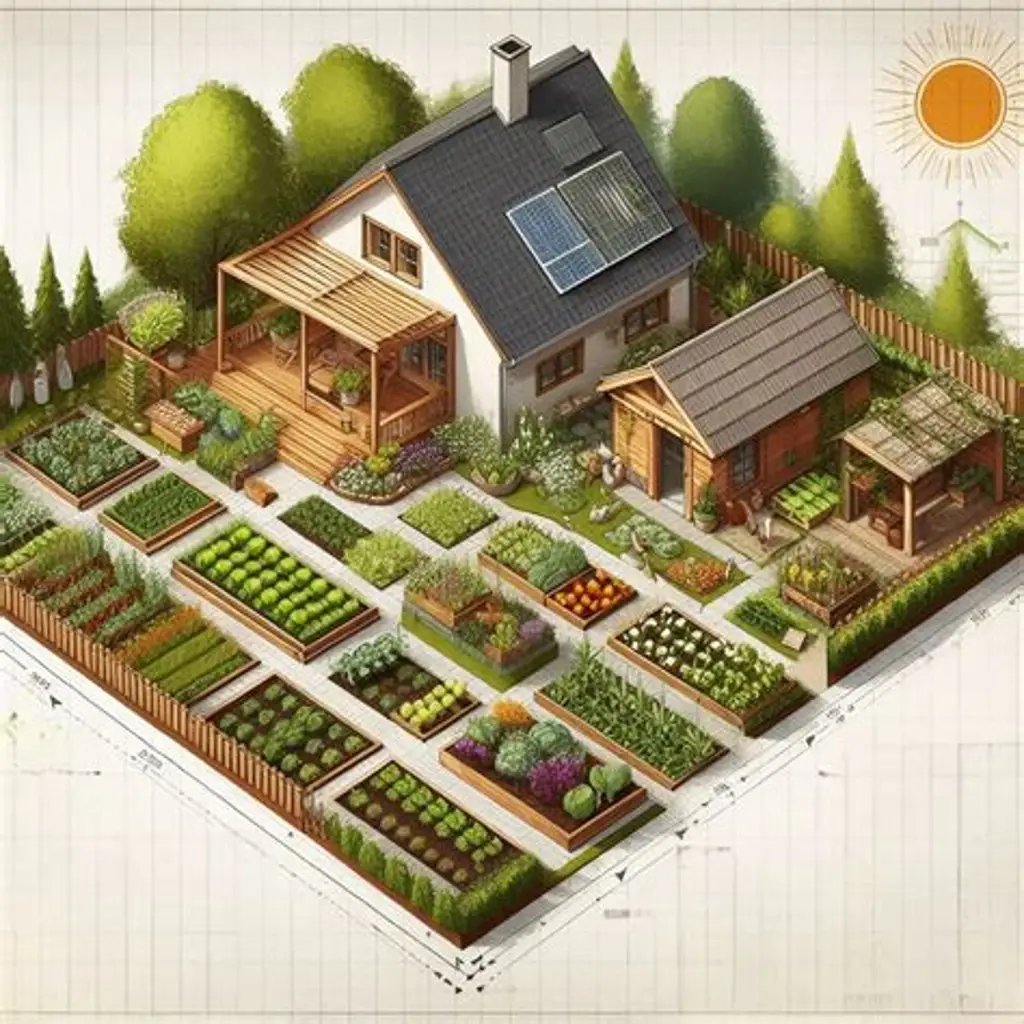
Draw a simple map showing existing buildings, boundaries, roads, water sources, slopes, and useful natural features.
Then consider where each activity should take place. Keep frequently used areas close to the house while placing larger livestock areas, orchards, or storage facilities farther away when appropriate.
A good layout can reduce unnecessary walking, improve efficiency, and make daily tasks easier.
Develop a Reliable Food System
Food production usually forms the foundation of a self sufficient homestead. Start with crops that your household regularly eats rather than growing large quantities of unfamiliar produce.
Choose varieties that suit your local climate and growing season. Combine fast-growing vegetables with longer-term crops such as fruit trees.
Add Livestock Carefully
Animals can provide eggs, milk, meat, manure, or other useful resources. However, livestock also require reliable food, water, shelter, veterinary care, and daily attention.
Start with a manageable number of animals. Chickens, for example, may require less infrastructure than larger livestock.
Before acquiring animals, calculate the annual costs and labor involved. This approach prevents the common mistake of purchasing animals before establishing adequate housing and feed supplies.
Manage Water Wisely
Reliable water can determine whether a homestead succeeds. Identify all practical water sources and estimate how much water your household, crops, and animals require.
Rainwater harvesting can supplement other supplies where local regulations and conditions allow. Gutters can direct rainfall into suitable storage tanks, while careful irrigation can reduce unnecessary water use.
Protect water sources from contamination and maintain storage systems regularly. Always ensure that drinking water receives appropriate treatment for your local conditions.
Build Healthy Soil
A self sufficient homestead benefits from productive soil because healthy soil reduces dependence on purchased inputs.
Use compost, properly managed animal manure, crop residues, mulch, and cover crops to build soil organic matter. Rotate crops and avoid unnecessary soil disturbance.
You can also reduce waste by turning suitable household and garden materials into compost. Over time, these practices can improve soil structure and nutrient cycling.
Consider Renewable Energy
Energy independence can become an important part of homestead planning. Solar panels, solar water heating, and other renewable technologies may reduce reliance on conventional energy sources where conditions support them.
Before investing, calculate your actual energy needs. Start with essential uses such as lighting, refrigeration, water pumping, or communications.
Energy-efficient appliances can reduce the size and cost of a renewable energy system. Furthermore, maintaining backup options can provide additional resilience during periods of low energy production.
Preserve Food for Later
A successful harvest does not have to end when the growing season finishes. Food preservation can extend the value of your production.
Depending on the food and local conditions, preservation methods may include:
-
Drying
-
Freezing
-
Fermentation
-
Pickling
-
Canning using safe, tested methods
-
Root-cellar or cool storage
Always follow reliable food-safety practices, particularly when preserving low-acid foods.
Reduce Waste and Reuse Resources
Homesteading becomes more efficient when you find useful purposes for materials that would otherwise become waste.
Plant residues can become compost or mulch. Properly managed animal manure can contribute to soil fertility. Containers may have practical storage uses when they are safe and suitable.
However, reuse should never compromise food safety, animal health, or environmental protection.
Develop Essential Skills
Equipment can make homesteading easier, but practical skills remain essential. Learn how to grow crops, maintain tools, repair basic infrastructure, preserve food, manage livestock, and respond to common emergencies.
Keep learning gradually rather than trying to master everything at once. Skills become more valuable when you practice them regularly.
Keep Records
Maintain simple records of planting dates, harvests, animal expenses, weather patterns, repairs, and household consumption.
These records can reveal where your homestead performs well and where improvements could save money or labor.
Grow at a Sustainable Pace
A self sufficient homestead should support your household rather than overwhelm it. Avoid taking on more projects, animals, or crops than you can realistically manage.
Start with one or two priorities, evaluate the results, and expand when your systems become reliable. This gradual approach can protect your budget and reduce unnecessary stress.
Ultimately, self sufficient homestead planning requires balance. Food production, water, energy, soil, livestock, storage, and skills all connect with one another.
The goal is not necessarily to eliminate every outside purchase. Instead, build systems that provide meaningful independence while remaining practical for your household. With patience, careful budgeting, and continuous learning, a self sufficient homestead can become more productive, resilient, and rewarding year after year.